
A Complete Guide to Laser Light Fat Reduction
You eat well and stick to your workout routine, but some stubborn pockets of fat just refuse to go away. It’s a common and frustrating experience that can make you feel like you’ve hit a wall in your fitness journey. This is where modern aesthetic treatments can make a real difference. Non-surgical options provide a way to target those specific areas without the risks and recovery time associated with surgery. One of the most effective methods is laser light fat reduction, which uses advanced technology to help your body naturally eliminate unwanted fat cells. This guide explains exactly what to expect from the process, from how it works to the results you can achieve.
Non-Surgical Fat Reduction, What to Expect?
What is Laser Light Fat Reduction?
Non-surgical fat reduction is just that, fat reduction without surgery. Typically, medical treatments for fat reduction involve some sort of surgery, such as liposuction. However, surgery of any kind comes with the risks of surgery. Traditional surgical liposuction can cause infection, leave scarring, or even cause internal damage. It also comes with downtime, sometimes lasting up to a week. Non-surgical fat reduction avoids all these pitfalls. Namely it is completely non-invasive, and surgery free. The skin itself is never broken, meaning there is no risk for scarring, and minimal risk for any sort of serious side effects. Non-surgical fat reduction comes in a few forms, but a popular one is laser lipo. Laser lipo uses laser technology to melt away fat beneath the skin. It is most useful for people trying to lose stubborn body fat that will not go away despite diet and exercise. However, it can be useful for people in every stage of the weight loss journey.
How Does This Body Fat Reduction Treatment Work?
Laser lipo uses low level laser beams that are released through treatment pads to heat the fat beneath the skin. This heat breaks down stored fat into free fatty acids and glycerol. These free fatty acids and glycerol are released into the body through the cell membranes. Once they are released, they are transported around the body to various muscles where it waits to be burnt off during post treatment exercises. Typically, when you exercise the body needs extra energy to continue to function. The body finds this energy by releasing any stored fat content from anywhere in the body. Laser liposuction uses the low-level beams to preempt this release of fat cells from a targeted area of the body, so when you exercise the fat has already been released. This means that the fat is only burned from the targeted area, and not randomly from the body. Therefore, the fat is reduced from the targeted area. In a sense, laser lipo melts fat away so your body can easily process it out with some exercise.
Exploring Different Types of Laser Fat Reduction
When you hear the term “laser fat reduction,” it’s easy to think of it as a single type of treatment. However, it’s more of an umbrella term for several different technologies that use laser energy to target and reduce fat. While they all share the same goal—to help you contour your body and address stubborn fat pockets—the way they achieve it can vary. Understanding these differences is key to finding the right approach for your specific body and aesthetic goals. Let’s look at some of the most common methods available.
Heat-Based Laser Lipolysis
One of the most well-known methods is heat-based laser lipolysis, sometimes called laser liposuction or liposculpture. According to the Cleveland Clinic, this cosmetic procedure uses controlled laser energy to heat fat cells until they are essentially destroyed. The heat liquefies the fat, making it easier for the body to process and eliminate naturally over the following weeks. This technique is effective for targeting specific areas where fat tends to accumulate, like the abdomen, thighs, or love handles. It’s a powerful tool for sculpting the body and achieving a more defined silhouette without the need for major surgery.
Low-Level Laser Therapy (LLLT)
Low-Level Laser Therapy, or LLLT, takes a gentler approach to laser fat removal. Instead of destroying the fat cells with intense heat, this technology uses low levels of laser energy to stimulate them. A study from the National Institutes of Health found that LLLT works by creating tiny, temporary pores in the fat cell membranes. This allows the stored fatty acids and glycerol to seep out, causing the cells to shrink. Your body’s lymphatic system then naturally flushes out these fatty acids. This is the technology we use at LightRx because it works with your body’s natural processes to reduce fat without harming the cells or surrounding tissue.
Minimally Invasive Laser Lipolysis
This method bridges the gap between non-invasive treatments and traditional surgery. As described by WebMD, minimally invasive laser lipolysis involves making a very small incision in the skin. A tiny laser fiber is inserted through this opening to melt the fat directly. Afterward, a small tube called a cannula is used to suction out the liquefied fat. While this does involve a physical incision and removal process, it’s performed under local anesthesia, meaning you’re awake for the procedure. It requires less downtime than traditional liposuction but is still considered more invasive than treatments that work entirely from outside the body.
The Tech Behind Your Results
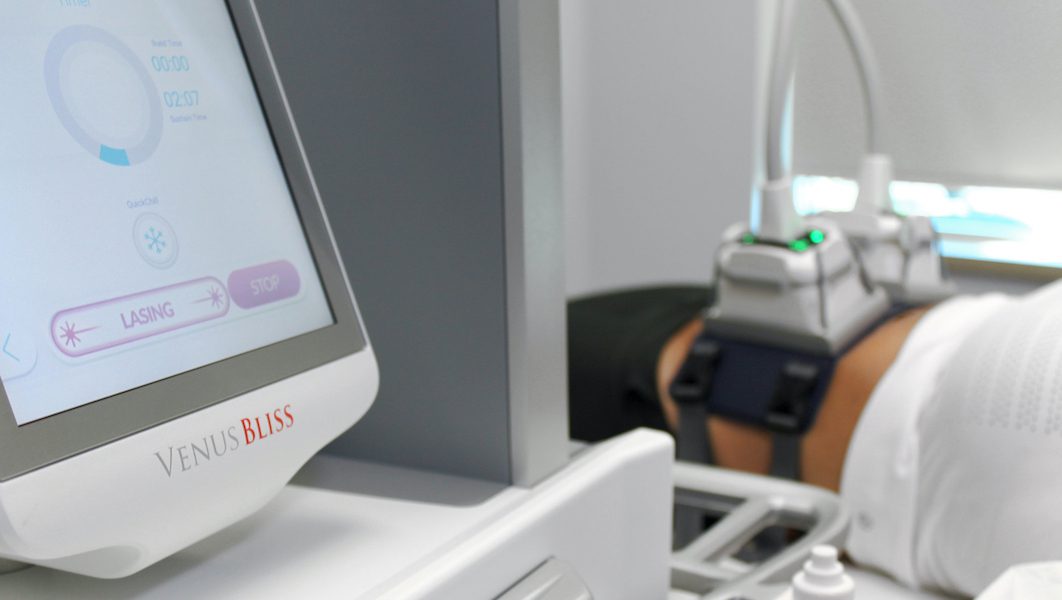
LightRx’s most popular laser lipo treatment is the Venus Bliss™ Non-Invasive Laser Lipolysis system. It is clinically validated for fat reduction and provides a more contoured look, with a focus on client comfort. It employs 1064 nm diode laser applicators to induce lipolysis. This leads to a reduction of excess fat in the target area. The Venus Bliss™ focuses on client care and comfort through its technology. It features 4 diode laser applicators that can be activated individually and placed in various configurations. This flexibility allows it to form fit to nearly any client. These applicators have uniform energy distribution across sapphire crystals which evenly heat the target tissue (unlike CoolSculpting). This technique eliminates hot spots in small areas that could cause discomfort or pain during treatment. Each applicator is also equipped with tissue contact sensors that ensure a safe and therapeutic effect. The lasers also measure temperature to regulate heat and ensure client comfort. The Venus Bliss™ also comes equipped with the (MP)2 applicator with VariPulse™ technology. This is a separate treatment but can provide clients with a solution to smooth out the abdominal area as part of the weight loss treatment and can also reduce cellulite on the body. It is powered by Multi-Polar Radio Frequency and Pulse Electro Magnetic Fields with VariPulse™ which helps fat removal. It utilizes dual multi-polar electrode crowns as well as a unique array of electrodes for a quick and efficient treatment of large areas. This wonderful applicator delivers significant depth of impact for a greater reduction of fat.
Is Laser Fat Reduction Right for You?
Deciding on any new treatment is a big step, and it’s important to know if it’s the right fit for your body and your goals. While laser fat reduction is a fantastic option for many, it’s not a universal solution. The best results come when the technology is matched with the right candidate. This is about ensuring the treatment will be both safe and effective for you. Think of it as a partnership between you and the technology—it works best when you’re set up for success from the start. Let’s explore what makes someone a great candidate for this treatment and who might be better suited for a different path.
Who Is an Ideal Candidate?
The best candidates for laser fat reduction are typically people who are already leading a healthy lifestyle but are struggling with specific, stubborn pockets of fat. According to the Cleveland Clinic, you’re likely a great fit if you are in good overall health, don’t smoke, and are close to your ideal weight. This treatment isn’t a primary weight-loss method, but rather a body contouring tool designed to fine-tune those areas that diet and exercise just can’t seem to touch. It’s also crucial to have realistic expectations about what the procedure can achieve. The goal is a more sculpted, streamlined silhouette, not a dramatic drop on the scale. If this sounds like you, you’re in a great position to see amazing results.
Who Should Avoid This Treatment?
On the flip side, laser fat reduction isn’t suitable for everyone. Your safety and results are the top priority, so it’s important to be honest about your health history. This treatment is generally not recommended for individuals who are significantly overweight or have a large amount of loose skin, as it’s designed to target fat, not excess skin. People with certain health conditions, such as diabetes, heart disease, or liver disease, should also avoid this procedure. Additionally, if you are pregnant or trying to become pregnant, you should wait. The best way to know for sure is to have a conversation with a professional. During a free consultation, a treatment specialist can review your medical history and help you determine the safest, most effective plan for your body.
What to Expect from Your Treatment Journey
Knowing what’s ahead can make the entire process feel more comfortable and exciting. Your journey with laser fat reduction is a structured process, from initial preparation to seeing your final, beautiful results. It’s designed to be as smooth and straightforward as possible. We’ll walk through everything you need to know, including how to get ready for your appointment, what recovery looks like, and the timeline for seeing the changes you’ve been waiting for. This way, you can feel confident and prepared every step of the way, focusing on the positive transformation ahead without any surprises.
How to Prepare for Your Appointment
Getting ready for your laser fat reduction session is simple. A few small adjustments can help ensure you get the best possible outcome. Your technician will give you a specific set of instructions, but common recommendations include avoiding blood-thinning medications like aspirin for a short period before your appointment to minimize any potential bruising. If you smoke, you may be advised to stop beforehand to support your body’s healing process. The most important preparation step is your initial consultation. This is where you’ll discuss your goals and receive a personalized treatment plan tailored to you, ensuring the procedure is perfectly aligned with your expectations and health profile.
Recovery and Potential Side Effects
One of the biggest advantages of non-invasive laser fat removal is the minimal downtime. Since the procedure doesn’t break the skin, recovery is typically quick and easy. Most people experience only mild, temporary side effects in the treated area, such as redness, minor swelling, or tenderness. These effects usually fade within a few hours to a couple of days. You can generally return to your normal daily activities, including work and light exercise, immediately after your session. This makes it an incredibly convenient option for anyone with a busy schedule who wants to achieve their body goals without putting their life on hold.
Timeline for Results
How long until I see changes?
Patience is key when it comes to seeing your final results. While the laser works its magic during the treatment, your body needs time to naturally process and flush out the treated fat cells. According to WebMD, many people start to notice visible changes in as little as six weeks. However, the most significant and noticeable results typically appear within three months as your body completes the fat elimination process. This gradual transformation ensures your new contour looks natural, smoothly revealing a more sculpted version of you over time.
Are the results permanent?
Yes, the results from laser fat reduction are considered permanent. The treatment works by destroying targeted fat cells, and once those cells are gone, they do not grow back. However, it’s important to maintain a stable weight to preserve your new shape. While the treated fat cells are gone for good, the remaining fat cells in your body can still expand if you gain weight in the future. Think of this treatment as a reset for specific areas. By continuing with a healthy diet and regular exercise, you can enjoy your beautifully contoured results for years to come.
How Much Does Laser Lipo Cost?
The cost of laser lipo can vary quite a bit, as it depends on several factors. On average, you can expect the price to range from $2,500 to $4,500 per treatment area. The final cost is determined by the size of the area being treated, the number of sessions required to achieve your desired look, and your geographic location. At LightRx, we believe in transparent pricing and personalized care. That’s why we offer a free consultation to assess your specific needs and create a custom treatment plan. We also offer flexible memberships and payment options to help make your aesthetic goals more accessible and affordable.
How Many Sessions Will I Need?
Typically, people need about four to six sessions for optimal results. It depends on the area of the target area in addition to several other personal factors. Everyone’s body is different, and LightRx takes that into consideration.
What About Downtime?
One of the major perks of being a surgery free and noninvasive treatment is that there is no downtime. You can leave our medspa and return to your normal daily life.
Does Laser Lipo Hurt?
In short, no, it is not painful. Many do not even experience major discomfort and liken it to being slapped by a rubber band. However, not everyone’s pain tolerance is the same, and there are some precautionary measures that can be taken. If you are worried about pain being a factor for you, be sure to mention that to us during your consultation.
Laser Lipo vs. Other Fat Reduction Methods
While laser lipo is a fantastic and popular choice for non-surgical fat reduction, the world of aesthetic technology offers a few different approaches to achieve similar goals. Understanding the landscape of available treatments helps you walk into your free consultation feeling confident and prepared to discuss the best path forward for your body. Each method has a unique way of targeting unwanted fat cells, and what works best for one person might differ for another. Let’s look at a few of the most common alternatives so you can see how they stack up against the heat-based technology of laser lipo.
Cryolipolysis (Fat Freezing)
You’ve probably heard of cryolipolysis under its more common brand name, CoolSculpting. Instead of using heat to melt fat, this method does the exact opposite. According to the American Board of Cosmetic Surgery, cryolipolysis uses controlled cooling to freeze and destroy targeted fat cells without damaging the surrounding skin or muscles. The body’s natural metabolic processes then gradually flush out these dead cells over the following weeks and months. It’s another effective, non-invasive way to target stubborn pockets of fat, but it relies on cold temperatures rather than the gentle, uniform heat used in treatments like Venus Bliss™.
Injectable Treatments
Injectable treatments offer a highly targeted approach to fat reduction. The most well-known is Kybella, which uses a synthetic form of deoxycholic acid—a substance your body naturally produces to help absorb fats. When injected into a specific area, it destroys fat cells on contact. This method is particularly effective for smaller, more concentrated areas, and it’s FDA-approved for reducing submental fat, otherwise known as a “double chin.” Unlike laser lipo, which uses applicators to treat broader areas as part of a body contouring plan, injectables are best suited for precision work in very localized spots.
Ultrasound Fat Reduction
Ultrasound technology isn’t just for medical imaging; it can also be used to break down fat. Treatments like UltraShape and Liposonix use focused, high-intensity ultrasound waves to disrupt and destroy fat cell walls without harming nearby tissues. Much like with laser lipo, once the fat cells are broken down, your body’s lymphatic system takes over, processing and clearing the cellular debris over time. This method uses mechanical energy from sound waves to achieve results, offering yet another non-invasive alternative for reducing unwanted fat and contouring the body.
Ready to Get Started?
If you would like to learn more be sure to schedule a consultation. The best way to know exactly what treatment is right for you is by calling us at 877-721-4547 and scheduling a consultation in one of our offices. These consultations take as little as 30 minutes and are private one on one consultations with the clinic director.
Frequently Asked Questions
Is laser fat reduction a good way to lose a lot of weight? Think of this treatment less as a weight loss method and more as a body contouring tool. It’s designed to be the final step for targeting specific, stubborn areas of fat that don’t respond to a healthy diet and consistent exercise. The goal is to refine and sculpt your shape, not to cause a major drop on the scale.
What exactly happens to the fat that gets “melted”? The laser energy doesn’t make fat vanish; it simply encourages your fat cells to release their contents. These fatty acids are then processed and flushed out by your body’s natural metabolic system, the same way it handles fat from the food you eat. A little exercise after your session helps your body use up that released energy and complete the process.
What areas of the body can I treat? This technology is quite versatile and is most effective on localized pockets of fat. Popular treatment areas include the abdomen, love handles, thighs, and upper arms. Essentially, it can be used on most places where you might have stubborn fat that you’d like to reduce. We can create a personalized plan for your specific goals during a consultation.
How is this different from surgical liposuction? The main distinction is that our laser fat reduction treatments are completely non-invasive. Unlike surgical liposuction, there are no incisions, no general anesthesia, and no required recovery time. Our procedure works from outside the body, using laser energy to prompt a natural process, while surgery physically removes fat and requires a significant healing period.
Do I need to change my diet or exercise routine after the treatment? To maintain your new, contoured shape, it’s best to stick with the healthy habits you already have. The fat cells we treat are permanently gone, but it’s still possible for remaining fat cells to expand. Continuing with a balanced diet and regular exercise is the best way to ensure your results are long-lasting.
Key Takeaways
- Laser fat reduction targets stubborn fat: This treatment uses focused energy to break down fat cells in specific areas, allowing your body to naturally clear them out for a more contoured appearance.
- Results are permanent but require maintenance: While the treated fat cells are gone for good, maintaining a healthy lifestyle is key to enjoying your new shape long-term. The best candidates are those already committed to their wellness goals.
- The treatment journey is straightforward and non-invasive: Expect a comfortable process with minimal downtime, allowing you to resume daily activities right away. A personal consultation is essential to create a treatment plan tailored to your specific body and goals.